I have a fair bit of time for the Adelaide Hills as a region for Italian grape varieties. Reminds me of Canberra in some ways - the spread of the district, the diversity of sites and their particular climates.
This wine is a co-fermented blend of pinot grigio, riesling and sauvignon blanc juices. The marketing is a bet each way. The website talks the Friuli, Trentino-Alto Adige regional talk of blocking varietal expression and going for neutrality of flavour, but interest in acid, texture and refreshment. The label walks the Dan Murphy's shelf talker line, speaking directly about reassuring fruit flavours of pear, lime and passionfruit.
This is a decent drink. Fruit first, texture later. Label over website. But the difference between the two versions of this wine points to where it does not really work for me. The riesling starts the wine out bright and crisp, the sauvignon blanc
tries to bring it together, but the core of it is a muddle of
passing-off. It tastes good, but like confusion at the same time.
The heart of it is that this is pinot gris, not grigio. There is a generous, creamy hit of ripe, sweet, pear flavour that swamps the mid palate. A 'smooth' texture in the midst of clear and sharp. Strangely, I'm reminded of a bowl of rhubarb and custard.
Could work well with something sweet and sour - perhaps caponata and good bread.
Screwcap, gift, 13% alcohol, $22 from the website here.
Showing posts with label adelaide hills. Show all posts
Showing posts with label adelaide hills. Show all posts
Thursday, February 7, 2013

Monday, February 4, 2013
Ochota Barrels Surfer Rosa Sangiovese Grenache 2012
The 2011 vintage release of sangiovese from Ochota Barrels was outstanding. Lithe, nervy acidy, persistent flavour, sinewy tannins - a whole new face for South Australian sangiovese. The 2012 is sangiovese with makeup on. It really, really, wants to go to a party and have people say nice things about how it looks.
Taras Ochota has made wine from Puglia and Sicily and there is perhaps a hint of Sardinian Cannonau going on here (though Sicily also grows grenache). The Adelaide Hills are the source of the sangiovese fruit in both the 2011 and 2012 releases. It is good fruit. The big difference here is the presence of grenache from the Onkaparinga Hills. The 2012 is still a red-fruited wine, about cherries and raspberries. The grenache adds a candied cherry and sweet-fruited raspberry to the crisp line of the sangiovese, as well as backing off the tannins and acid. Low in alcohol (12.2%) but ripe, nothing green, this is fruit-forward, acid second, tannins in the rear.
The result is more crowd-pleasing, easier to drink, than the challenging 2011. But take it to a party. Leave the 2011 for serious romance & a picnic rug.
Screwcap, gift, about $25, 12.2% alcohol, website here.
Taras Ochota has made wine from Puglia and Sicily and there is perhaps a hint of Sardinian Cannonau going on here (though Sicily also grows grenache). The Adelaide Hills are the source of the sangiovese fruit in both the 2011 and 2012 releases. It is good fruit. The big difference here is the presence of grenache from the Onkaparinga Hills. The 2012 is still a red-fruited wine, about cherries and raspberries. The grenache adds a candied cherry and sweet-fruited raspberry to the crisp line of the sangiovese, as well as backing off the tannins and acid. Low in alcohol (12.2%) but ripe, nothing green, this is fruit-forward, acid second, tannins in the rear.
The result is more crowd-pleasing, easier to drink, than the challenging 2011. But take it to a party. Leave the 2011 for serious romance & a picnic rug.
Screwcap, gift, about $25, 12.2% alcohol, website here.
Tuesday, December 6, 2011
Ochota Barrels 2011 'surfer rosa' sangiovese (Adelaide Hills)
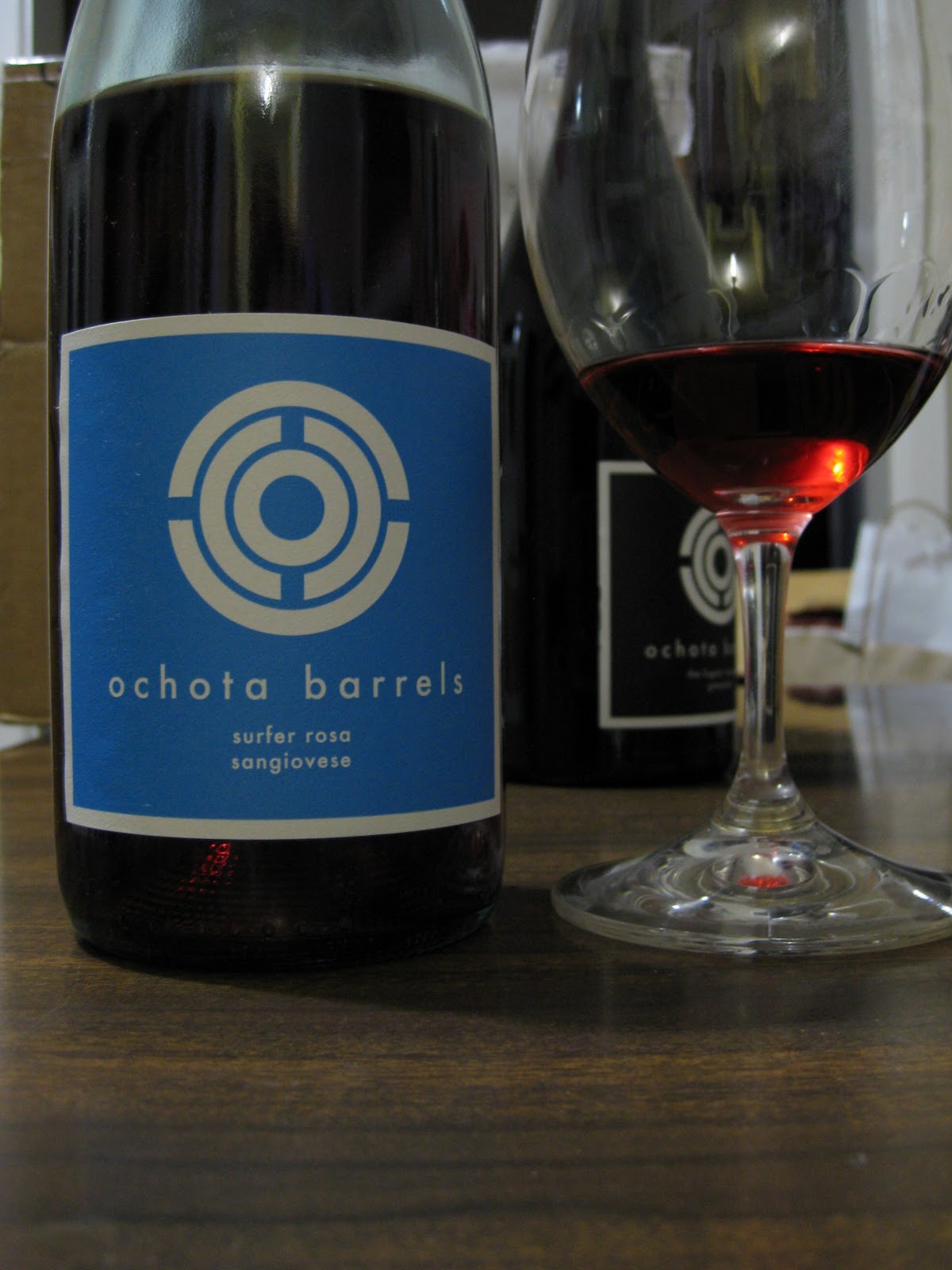
And there is another story here, apart from the generally-excellent story of Taras and Amber making wines around the world, including a stint making wines in Puglia and Sicily for a Swedish wine importer. Not to mention the time with Two Hands, Murray Street, Nepenthe, Californian producers and a winery in Southern Sweden. I kept expecting a story about the first vineyard in the Arctic Circle...
The most recent story has to do with a trip in Mexico and a decision to stay sticking together things surf and wine, which somehow leads to taking the best McLaren Vale grenache and the best Barossa shiraz and making the best wines they can, from the best stuff, from the best places... all of which makes sense, but none of which makes obvious sense for a sangiovese from the Adelaide Hills.
But this wine does make sense - a whole lot of sense. All 1168 bottles of sense. 110 cases of falling for a small parcel of fruit then swinging through some very different (for Australian sangiovese) wine making. It looks like a darker-rose, to start with. It's bottled in blue glass with a snappy blue label. It has barely a brush with sulphur. The fruit was handpicked in June. Not summer-June. There is 1% of Arneis skins included (bagged & frozen three weeks earlier just for this purpose). It has 20% whole bunches, a seven day cold-soak and a a wild yeast ferment.
It spent 77 days on skins. Days. There is tannin rippling all through this wine, pulling along beautiful, crunchy-fresh acids. There is sangiovese fruit in fleshy display ('vamping' as Taras puts it) but nothing plush or reliant on sweet-ripeness of fruit. Basket pressed, settled and bottled with speed.
Light, yet intricate, this is a $25 bottle of mesmerising fun. I've not tried an Australian sangiovese remotely like it. Get onto this.
$25, winery purchase, screwcap, 12.5% alcohol. Bottle 234 of 1168 tasted. Two more to go, which won't make it past Christmas.
Friday, November 25, 2011
Fiano & Malaysian food
A quick note on a surprising match (for me). Dinner for a birthday last night at Abel's Kopi Tiam restaurant in Manuka. Walking over from the bus, I go past Vintage Cellars and decide to duck in. Let's not dwell on the service, but I notice a bottle in the chill cabinet of the 2010 Fox Gordon Adelaide Hills Fiano for less than a $20 and decide to take it to dinner, along with the 2007 Lazy Ballerina McLaren Vale shiraz viognier from David Hook I was already lugging.
A large-ish group, so a banquet was the plan. Fried squid in spice, a good chicken satay, fresh roti, lots of vegetables, rich noodles, a chicken curry, beef rendang & rice... The fiano did a surprisingly good job against everything other than the rendang. The fleshy, candied-lemon texture and flavours, plus a touch of phonolic grip, all worked well with the moderately spiced food.
So, Fiano and Malaysian food. Worth a try, I think.
A large-ish group, so a banquet was the plan. Fried squid in spice, a good chicken satay, fresh roti, lots of vegetables, rich noodles, a chicken curry, beef rendang & rice... The fiano did a surprisingly good job against everything other than the rendang. The fleshy, candied-lemon texture and flavours, plus a touch of phonolic grip, all worked well with the moderately spiced food.
So, Fiano and Malaysian food. Worth a try, I think.
Monday, February 7, 2011
Sparkling pinot grigio - tasting without category
Even when tasting blind, I use categories to order my expectations, process what I taste, and make judgements however subjective. If I can see the wine, the visual cues start the categorisation: white, pink, red; bubbles or no; age cues or no. Tasting non-blind, category cues can be stronger. Knowing the year, the variety or blend, region, maker, the pricepoint, how the wine made its way to you... all these cues help build a frame for evaluating a wine.
But the efficacy of these category cues largely depends on having past examples to populate these categories with. Judgements of difference, or similarity, rely on other taste examples. But what happens when you have a new category and a new example, such as a sparkling pinot grigio from the Adelaide Hills?
One aesthetic judgement argument would suggest that the new object (bubbly, lemon juice on fresh pear, crisp, light to drink) could be processed against how it makes the taster feel. What do the senses say? What sensations are produced by watching, smelling, looking, tasting, drinking the wine? Is there an emotional response? This is judgement from affect (emotion, sense, sensation, considered together).
But I don't find I can taste wine from affect alone. Categories creep in. I have never had sparkling pinot grigio before. But I have had Champagne, Cava, Prosecco, German bubbles and sparklers made from 'other' grapes, such as riesling, chenin blanc and sauvignon blanc. And I have had pinot grigio before, the grape in the grigio-to-gris range, from different countries and regions. I know that I prefer gris to grigio, that I like the grape to taste of bright pear juice more than citrus, and to not show alcohol heat.
The glass in front of me, even while I try to not think categories but focus on newness, on the affective dimension of the wine, ends up passing by these other categories (variety, style, region) in my head. It's my first sparkling pinot grigio, and I quite like it (the Japanese woodcut label another aesthetic cue), but I end up tasting it with mouthfuls of many other wines. Which is fine by me.
But the efficacy of these category cues largely depends on having past examples to populate these categories with. Judgements of difference, or similarity, rely on other taste examples. But what happens when you have a new category and a new example, such as a sparkling pinot grigio from the Adelaide Hills?
One aesthetic judgement argument would suggest that the new object (bubbly, lemon juice on fresh pear, crisp, light to drink) could be processed against how it makes the taster feel. What do the senses say? What sensations are produced by watching, smelling, looking, tasting, drinking the wine? Is there an emotional response? This is judgement from affect (emotion, sense, sensation, considered together).
But I don't find I can taste wine from affect alone. Categories creep in. I have never had sparkling pinot grigio before. But I have had Champagne, Cava, Prosecco, German bubbles and sparklers made from 'other' grapes, such as riesling, chenin blanc and sauvignon blanc. And I have had pinot grigio before, the grape in the grigio-to-gris range, from different countries and regions. I know that I prefer gris to grigio, that I like the grape to taste of bright pear juice more than citrus, and to not show alcohol heat.
The glass in front of me, even while I try to not think categories but focus on newness, on the affective dimension of the wine, ends up passing by these other categories (variety, style, region) in my head. It's my first sparkling pinot grigio, and I quite like it (the Japanese woodcut label another aesthetic cue), but I end up tasting it with mouthfuls of many other wines. Which is fine by me.
Saturday, January 8, 2011
Scott 2010 Fiano (Adelaide Hills)
My second wine from this new Adelaide Hills producer and I like it a lot. Fiano has the ability to retain natural acidity even in the heat of South Australian vintage, as well as delivering some genuine interest in flavours, textures and palate weight.
What I like best about this wine is that it does not taste of young vines. Sure, it is ripe fruited (13.5% alcohol), but there is weight and intensity that is unforced and honest. The citrus is there (more in the just-candied lemon part of the spectrum), there is an attractive lemon pith bitterness, it has length, persistence and crispness, but for me the star of the flavour show is a clean and clear hit of pear drops - pear fruit and pleasantly sour acid, working together. While a little less ripeness and alcohol might freshen the wine and give it a more brisk carry through the mouth, I wouldn't want it to come at the expense of that clarity of pear drops flavour and acid, nor the richness of mid-palate texture the wine has.
Good fruit, smart winemaking and a characterful wine of versatility and persistent interest. A producer to watch, I reckon.
$25 rrp (10% off in a six pack), 13.5% alcohol, screwcap. Website here.
What I like best about this wine is that it does not taste of young vines. Sure, it is ripe fruited (13.5% alcohol), but there is weight and intensity that is unforced and honest. The citrus is there (more in the just-candied lemon part of the spectrum), there is an attractive lemon pith bitterness, it has length, persistence and crispness, but for me the star of the flavour show is a clean and clear hit of pear drops - pear fruit and pleasantly sour acid, working together. While a little less ripeness and alcohol might freshen the wine and give it a more brisk carry through the mouth, I wouldn't want it to come at the expense of that clarity of pear drops flavour and acid, nor the richness of mid-palate texture the wine has.
Good fruit, smart winemaking and a characterful wine of versatility and persistent interest. A producer to watch, I reckon.
$25 rrp (10% off in a six pack), 13.5% alcohol, screwcap. Website here.
Thursday, January 6, 2011
Scott 2009 Shiraz Sangiovese (Adelaide Hills)
I have a lot of time for the Adelaide Hills as a wine region. Ashton Hills is around the top of my South Australian wine tree, but newer producers such as Ngeringa and Mike Press also feature in my buying and drinking. That said, some of the Adelaide Hills standard bearers do not do much for me (the Shaw & Smith shiraz being a case in point - much prefer their chardonnay).
Scott Winemaking is a new Adelaide Hills producer. The range includes a Fiano, a sparkling pinot grigio, a multi-vintage sparkler from the traditional French champagne varieties, and this wine, a blend of 82% shiraz and 18% sangiovese. Blending trials for wines like these must be fascinating - seeing the shifts in flavour, aroma, texture and finish as the balance of the blend alters.
There are the hallmarks of Adelaide Hills shiraz here, with purple fruits, a little tar, some violets and a plushness of texture, especially through the mid palate. The 18% sangiovese adds notes of cherries and a lightness through the length of the wine, including a touch of furry tannins. The overall lift (not VA) of the wine makes me wonder if a bucket of viognier might have found itself in the shiraz ferment at some stage. Delicious is not a word I often use for wine, but there is a fruit-driven succulence to this that warrants the word.
The wine went well with herbed lamb, roast borlotti beans and a dressed salad of broad beans and mint. I doubt it has the bones for age in bottle (not a wine about structure, tannin and acid, more about fruit shape, weight and texture), but that is no bad thing given how well it drinks now. The 20% new and 80% used French oak seems a good balance, but I suspect a little more sangiovese in the blend may have made for a better wine.
14% alcohol, sealed with screwcap, rrp $25 a bottle or $22.50 in a six pack ordered via their website.
Scott Winemaking is a new Adelaide Hills producer. The range includes a Fiano, a sparkling pinot grigio, a multi-vintage sparkler from the traditional French champagne varieties, and this wine, a blend of 82% shiraz and 18% sangiovese. Blending trials for wines like these must be fascinating - seeing the shifts in flavour, aroma, texture and finish as the balance of the blend alters.
There are the hallmarks of Adelaide Hills shiraz here, with purple fruits, a little tar, some violets and a plushness of texture, especially through the mid palate. The 18% sangiovese adds notes of cherries and a lightness through the length of the wine, including a touch of furry tannins. The overall lift (not VA) of the wine makes me wonder if a bucket of viognier might have found itself in the shiraz ferment at some stage. Delicious is not a word I often use for wine, but there is a fruit-driven succulence to this that warrants the word.
The wine went well with herbed lamb, roast borlotti beans and a dressed salad of broad beans and mint. I doubt it has the bones for age in bottle (not a wine about structure, tannin and acid, more about fruit shape, weight and texture), but that is no bad thing given how well it drinks now. The 20% new and 80% used French oak seems a good balance, but I suspect a little more sangiovese in the blend may have made for a better wine.
14% alcohol, sealed with screwcap, rrp $25 a bottle or $22.50 in a six pack ordered via their website.
Friday, May 14, 2010
10 year old Australian nebbiolo - 2001 Parish Hill (Adelaide Hills)
So, what might a ten year old Australian nebbiolo taste like? I opened a 2001 Parish Hill nebbiolo last night to find out.
The usual pale red to brick light colour and edges. Somewhat muted nose, on-again off-again dull florals to smell. The same on-off pattern stretches through the palate, sometimes evident aged fruit, other times tar, dried herbs and a hint of the medicinal. Screwcap has not let this wine down - it is evidently nebbiolo, just lacking some stuffing and drive. The tannins have resolved themselves and the wine went well with organic chicken schnitzel, pan fried mushrooms with thyme, new potatoes and steamed green veg (brussel sprouts and zucchini).
Nothing to write home about, but evidence that some of the early Australian nebbiolo (my grand sample of one) is able to make a credible showing ten years from vintage. I'll look at some older Coriole nebbiolo in a coming post.
The usual pale red to brick light colour and edges. Somewhat muted nose, on-again off-again dull florals to smell. The same on-off pattern stretches through the palate, sometimes evident aged fruit, other times tar, dried herbs and a hint of the medicinal. Screwcap has not let this wine down - it is evidently nebbiolo, just lacking some stuffing and drive. The tannins have resolved themselves and the wine went well with organic chicken schnitzel, pan fried mushrooms with thyme, new potatoes and steamed green veg (brussel sprouts and zucchini).
Nothing to write home about, but evidence that some of the early Australian nebbiolo (my grand sample of one) is able to make a credible showing ten years from vintage. I'll look at some older Coriole nebbiolo in a coming post.
Subscribe to:
Posts (Atom)